
Quick Answer: What is the Difference Between ISRC and ISWC?
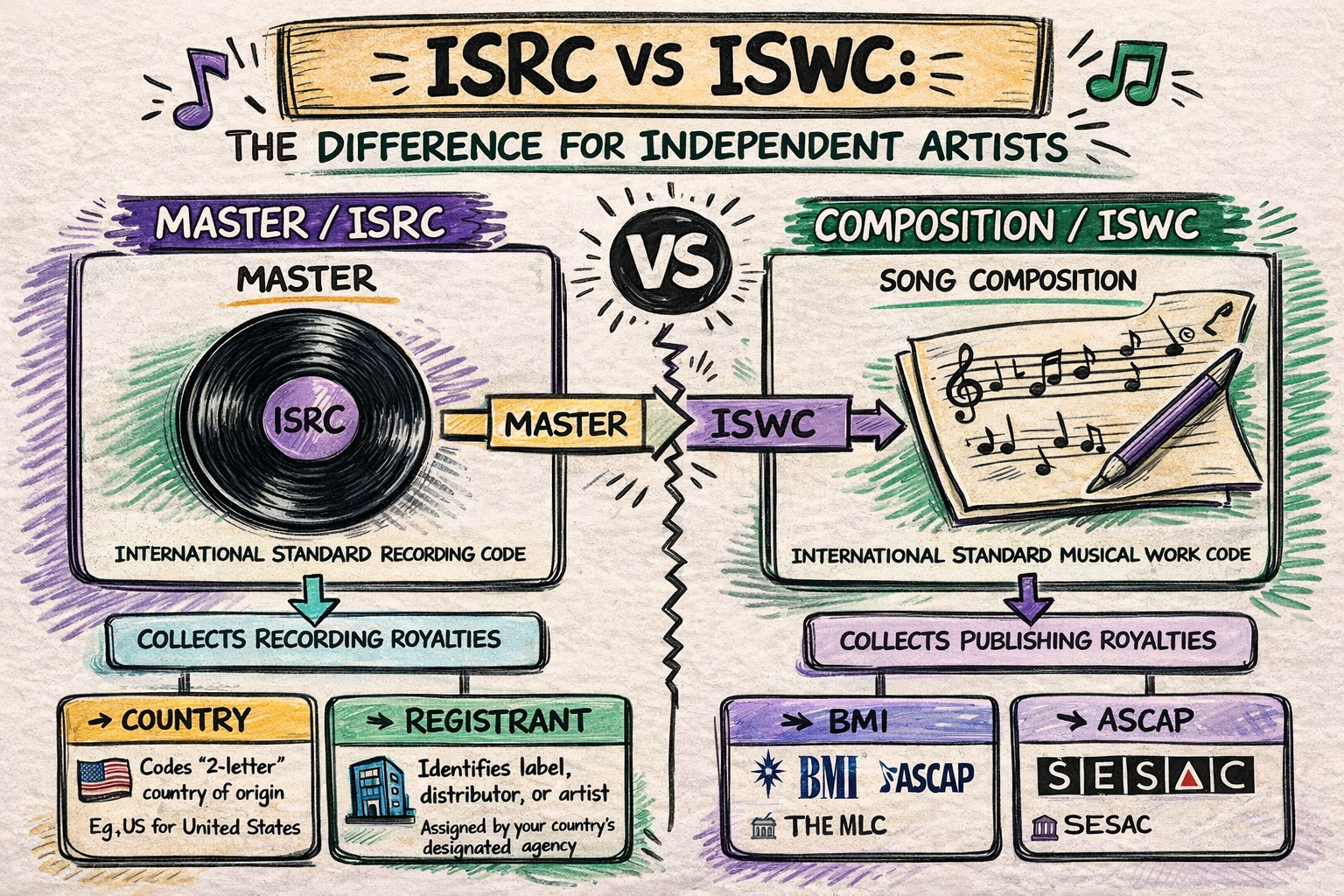
An ISRC identifies a specific recording, while an ISWC identifies the underlying musical work. Different recordings of the same song can therefore have different ISRCs while referring to the same composition. The codes help match metadata; they do not prove ownership or guarantee royalty payments.
Keep recording and composition records separate, then connect them accurately. This guide explains the identifiers, when a recording needs a new code, and what to collect before transferring an existing catalog.
What is an ISRC Code?
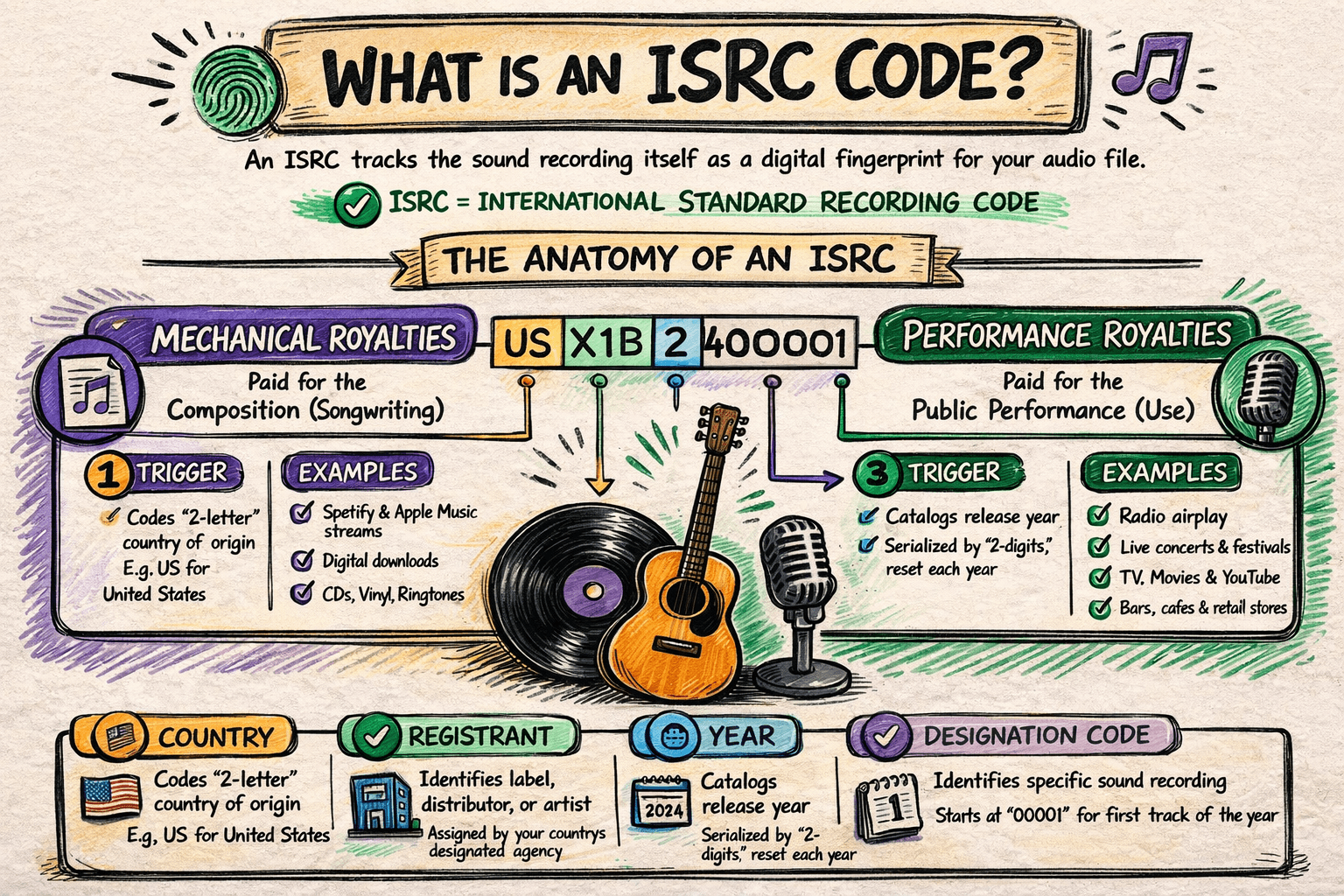
ISRC stands for International Standard Recording Code. It identifies a sound recording or music video, rather than its current owner or the release containing it. Ownership information is maintained separately. IFPI explains why ownership changes do not change the ISRC.
An ISRC is assigned metadata, not a fingerprint calculated from the audio. Keep it associated with the correct recording version in your catalog and distributor records.
The Anatomy of an ISRC
An ISRC contains 12 letters and digits: a five-character prefix, a two-digit year of reference and a five-digit designation code. The year refers to code assignment, which can differ from recording or release year. See IFPI’s current ISRC structure.
What is an ISWC Code?
ISWC stands for International Standard Musical Work Code. It identifies the composition rather than a recording, and it does not encode ownership shares. Its format is the letter T, nine identifying digits and a check digit. Read the official ISWC explanation.
Several recordings can relate to one musical work. A new cover recording needs its own recording identifier; confirm the correct work registration with the relevant society or publishing administrator, particularly for adaptations.
ISRC vs ISWC: What’s the Difference?
The difference is what each code identifies. Neither is a substitute for rights agreements, correct registrations or a royalty collection arrangement.
| Feature | ISRC | ISWC |
|---|---|---|
| Identifies | A specific recording | A musical work |
| Full name | International Standard Recording Code | International Standard Musical Work Code |
| Assignment route | An authorized registrant or ISRC manager within the ISRC system | The ISWC system through participating registration agencies |
| Metadata context | Recording versions and distribution records | Work titles, creators and composition records |
| New cover recording | A distinct recording needs its own ISRC | The same work can retain its ISWC |
| Proves ownership? | No | No |
Do You Need New Codes for Remasters or Covers?
Not every change to a file requires a new ISRC. Converting its format or bitrate does not by itself create a new recording identity. Remastering needs case-specific review. IFPI’s rules on retaining an existing code.
A new recording or a material musical change, such as a different mix or edit, requires its own ISRC. A newly recorded cover or acoustic performance is a different recording. IFPI’s new-code guidance.
Can You Keep Your ISRC When Switching Distributors?
Yes. Keep the existing ISRC when transferring the same recording. Changing distributor, licensing the recording or changing its owner does not create a new recording. Ask the receiving distributor how to submit your existing identifiers instead of accepting automatic reassignment. IFPI’s ownership guidance.
Keep the exact recording and version information together. An ISRC identifies a recording; a release barcode or UPC identifies the release product. Ask the receiving distributor whether its transfer process accepts your existing release barcode rather than treating the two codes as interchangeable.
Keeping an ISRC alone does not guarantee that Spotify play counts or playlists will carry over. Spotify’s track-linking guidance requires matching audio and metadata, including duration, title and artist name; matching play counts in the desktop app are its stated check. Check Spotify’s re-uploading guidance.
Content ID administration is another handover item. A recording identifier does not transfer claims or establish exclusive rights. See our YouTube Content ID guide for provider handovers and ownership conflicts.
Catalog-Identifiers Checklist Before a Transfer
Create one catalog sheet with a row for each recording. Use these checks to avoid confusing a recording, a release and a composition:
- Recording: existing ISRC, exact title, version, main and featured artists, duration, and the corresponding master audio file.
- Release: release title, UPC or other release barcode, original release date, artwork, track order and track numbers.
- Platform records: existing artist, release and track URLs or IDs for comparison after delivery.
- Composition: work title, writers and the ISWC if already assigned. Keep society work IDs labeled separately from the ISWC.
- Rights and administration: relevant agreements, territories, current distributor and any separate Content ID administrator.
- Verification: compare your catalog export with the receiving provider’s accepted metadata before delivery; resolve discrepancies with the current administrator.
Where to Find Your Existing Identifiers
Start with your current distributor’s track details, catalog export and original release-delivery records. Check composition identifiers in your society’s work records or with your publishing administrator. If records disagree, ask for confirmation before creating a replacement identifier.
How to Get Your Metadata Right
If a recording already has an ISRC, reuse it for that recording. For a genuinely new recording, arrange assignment through an authorized route. For an ISWC, follow the applicable work-registration process. How to obtain an ISWC.
Match songwriter names and work records carefully. For the distinction between composition income streams, read our Mechanical vs Performance Royalties guide. An identifier helps connect records; it does not replace the necessary registrations.
For help preparing a catalog for Six Eyes, review our distribution features and current plans, then contact our team with your existing identifiers and release details. Confirm how existing codes will be retained before submission.
Frequently Asked Questions (FAQ)
Do I need to buy an ISRC code to upload to Spotify?
Check your distributor’s assignment service and current fees. A recording that already has an ISRC should retain it; do not buy or request another code merely because you are changing provider.
How do I find my ISWC code?
Check your registered work in your society’s catalog or ask your publishing administrator. If only a local work number is shown, confirm whether an ISWC has been assigned; the identifiers are not necessarily the same.
Can one song have multiple ISRC codes?
Yes. Different recordings of the same composition, such as a studio recording, live performance or remix, can each have their own ISRC. The same unchanged recording should retain its existing code.
Can I make up my own ISRC?
Do not invent a code. Authorized registrants can assign codes within their allocated prefix and designation range; otherwise use an authorized assignment service. Follow the official format and avoid duplicate assignment.
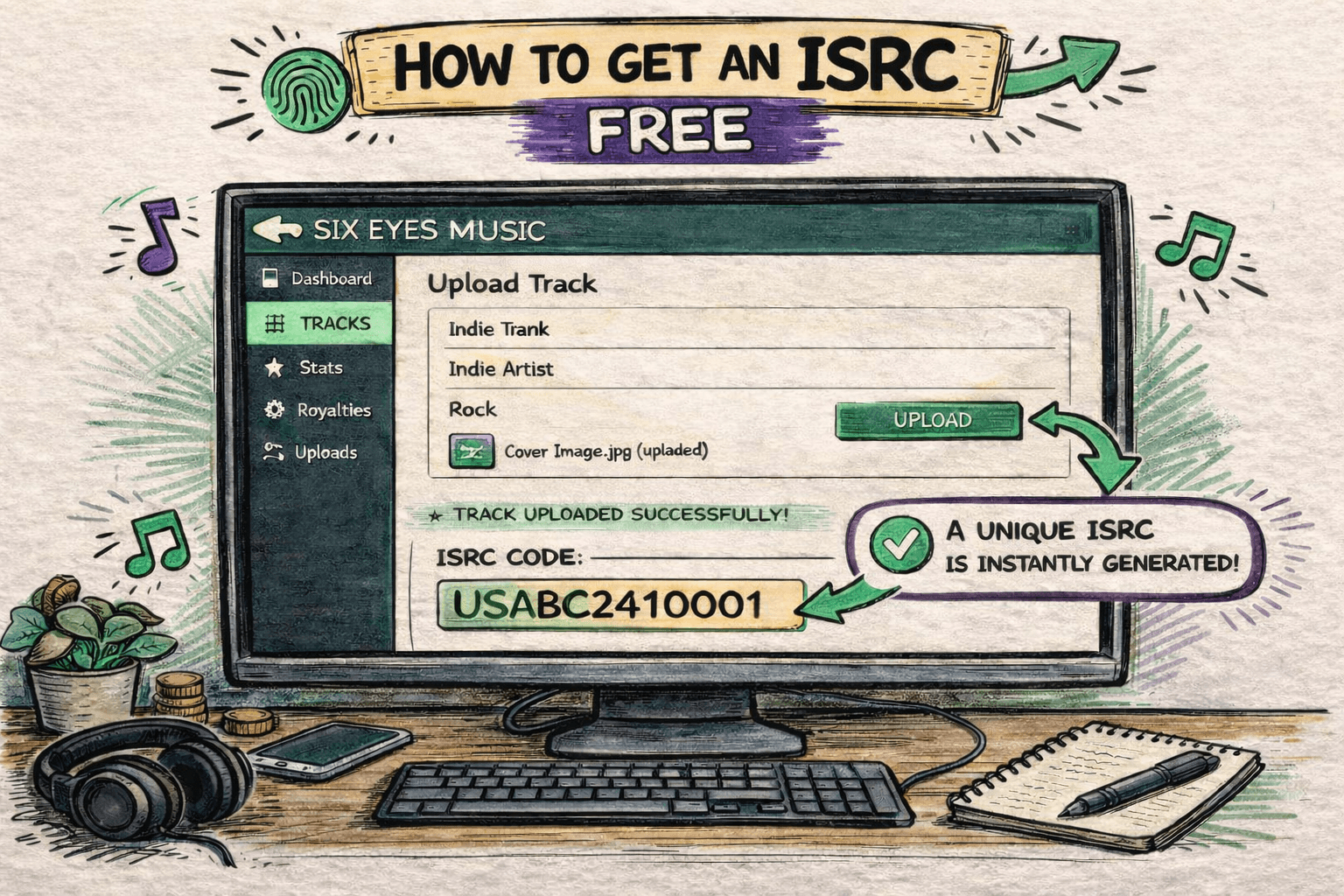
Does Six Eyes Music provide ISRC codes for free?
Confirm the current inclusion and terms on our pricing page or with support. If your recording already has a code, provide it during the transfer instead of requesting a new one.