
Quick Answer: Mechanical vs. Performance Royalties
Mechanical royalties are generated when a song is reproduced or downloaded, such as through interactive Spotify streams. Performance royalties are generated when a song is publicly broadcasted, like on the radio, live gigs, or non-interactive playlists. Both are essential income streams for modern songwriters.
We at Six Eyes Music work with independent artists every day to ensure their catalogs are fully monetized. The most common point of confusion we see is the split between different types of publishing royalties. Understanding how your compositions make money is non-negotiable for a professional music career. If you are writing original tracks—whether it is a hard-hitting rap beat or a soulful acoustic song like Kabhi Shaam Dhale—you are owed both mechanical and performance royalties.
What Are Music Publishing Royalties?
Publishing royalties pay the original songwriter and composer, not necessarily the performing artist. Whether you write pop hits or compose indie ballads, these specific royalties ensure you get paid whenever your underlying composition is utilized commercially.
Music royalties are split into two halves: the master recording (the actual audio file) and the composition (the lyrics and melody). Publishing deals entirely with the composition. Whenever that composition is used, it generates publishing royalties. We break these down into two main categories: mechanical and performance.
The Mechanics of Mechanical Royalties
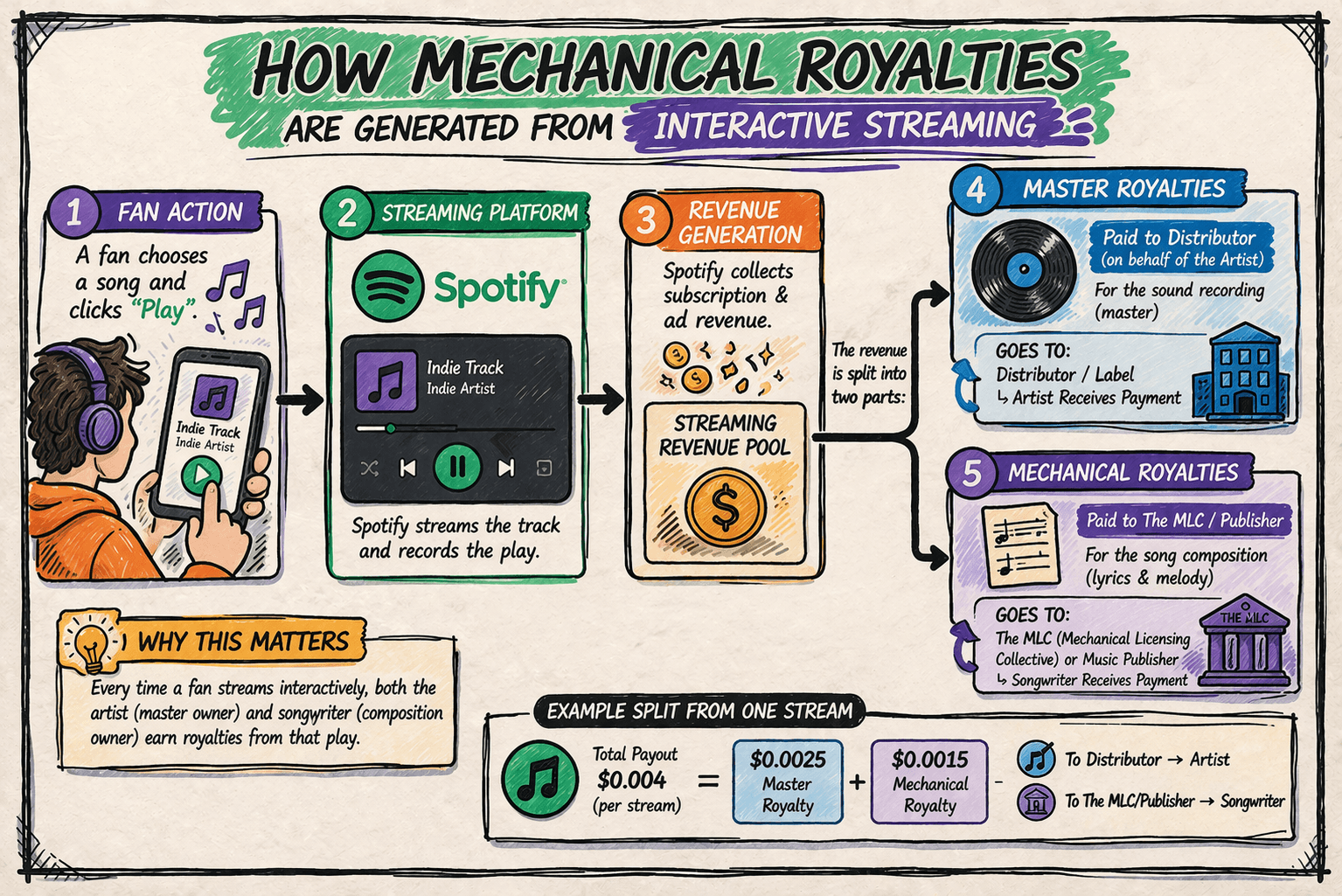
Mechanical royalties trigger whenever your composition is digitally or physically reproduced. From vinyl pressing to interactive streams on major platforms, these micro-pennies add up rapidly for active independent artists.
Interactive Streaming and Downloads
In the digital era, mechanical royalties primarily come from interactive streaming on DSPs like Spotify and Apple Music. “Interactive” means the user chooses exactly what song to play. Every time a user clicks play on your track, a mechanical royalty is generated because the platform is temporarily reproducing your song on their device. Digital downloads on platforms like iTunes also generate these royalties.
How to Collect Mechanicals
You cannot collect these royalties directly from DSPs. In the United States, mechanical royalties from digital streams are collected by organizations like The MLC (Mechanical Licensing Collective). Outside the US, local mechanical rights organizations (MROs) handle this. Independent artists typically use a publishing administrator to register their tracks globally and collect these mechanicals on their behalf.
The Power of Performance Royalties
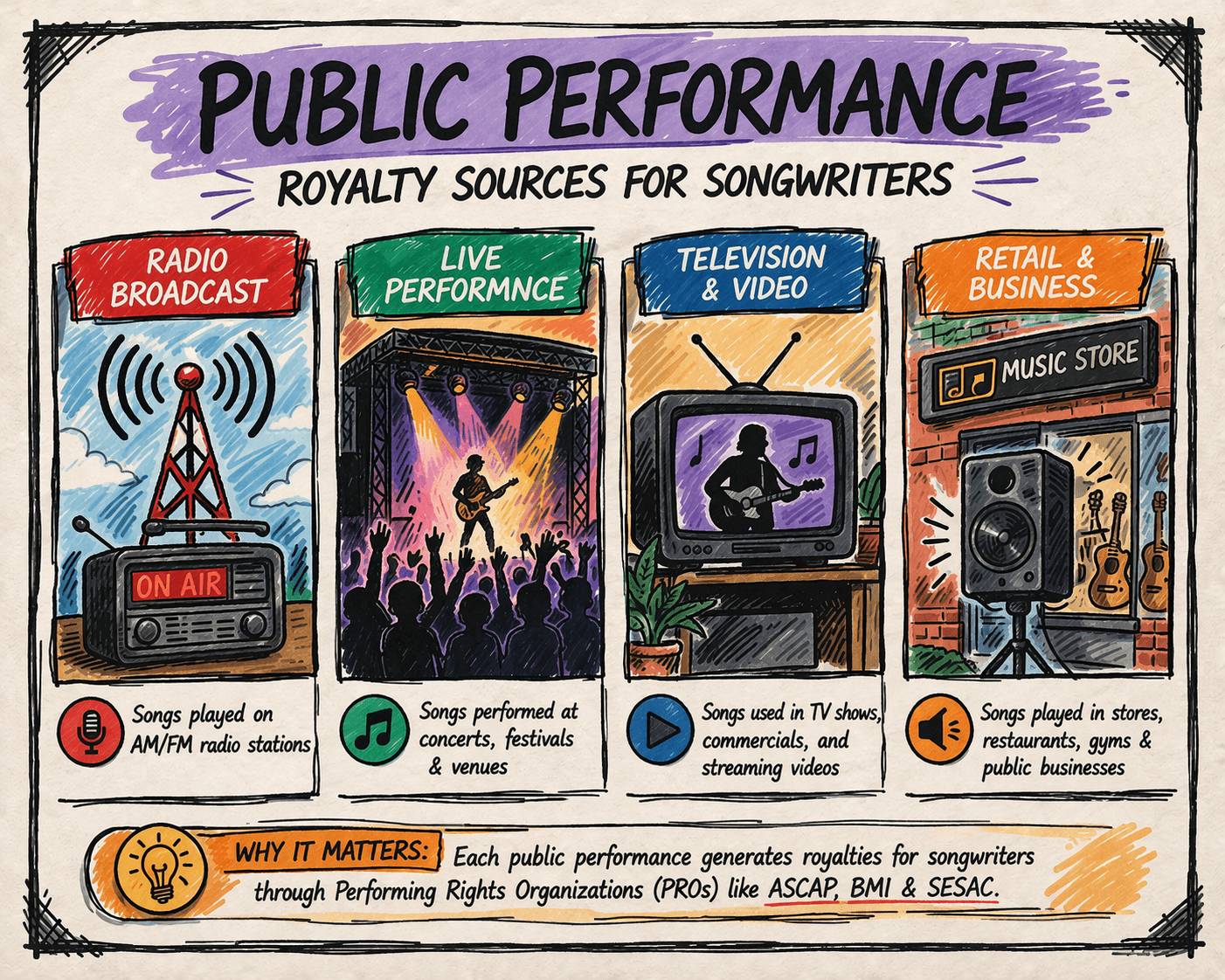
Performance royalties trigger when your song is played in public. This covers traditional FM radio, live concerts, television broadcasts, and non-interactive streaming stations like Pandora or SiriusXM.
Public Broadcasts and Gigs
If your song plays over the speakers at a coffee shop, on a local radio station, or even if you perform it live at a venue, it generates a performance royalty. Venues and broadcasters pay blanket licenses to cover these costs. Non-interactive streams (where a user picks a station but not the specific song) also fall under this category. Furthermore, user-generated videos can generate YouTube performance royalties when your music is broadcasted across the platform.
The Role of PROs
Performance Rights Organizations (PROs) collect these royalties. Well-known PROs include ASCAP and BMI in the US, PRS in the UK, and IPRS in India. As a songwriter, you must affiliate with a PRO in your home territory. They track public performances and issue payouts directly to you.
Direct Comparison: Mechanical vs Performance Royalties
Knowing the exact triggers for each royalty type helps you register with the correct collection agencies. Use this breakdown to ensure you never leave money on the table.
Royalty Breakdown
| Feature | Mechanical Royalties | Performance Royalties |
| The Trigger | Reproduction (Digital or Physical) | Public Broadcast or Performance |
| Common Sources | Spotify (Interactive), Apple Music, Vinyl, CDs | FM Radio, Live Gigs, TV, Pandora, Retail Stores |
| Collection Agency | The MLC, MROs, Publishing Administrators | PROs (ASCAP, BMI, PRS, IPRS) |
| Who Gets Paid? | Songwriters and Publishers | Songwriters and Publishers |
Global vs Local: How GEO Impacts Your Payouts
Music royalty collection varies drastically by region. While local PROs manage your domestic public performances, international streams require a network of sub-publishers or a global administration partner.
If you are based in India, IPRS collects your domestic performance royalties. However, if your track goes viral in the UK or the US, IPRS relies on reciprocal agreements with PRS or BMI to collect that money. This international transfer process takes time. To capture global mechanical and performance royalties efficiently, professional artists use administrative publishing entities that have direct, worldwide relationships.
Collecting Your Money: The Six Eyes Music Approach
Securing your publishing rights is only half the battle. You also need a trusted partner to monetize your master recordings and get your tracks onto digital service providers seamlessly.
While you handle your PRO registration for publishing, we handle the heavy lifting for your master recordings. When you are ready to push your next release to the world, you can distribute your music globally through Six Eyes Music. We ensure your audio reaches every major platform with the correct metadata, allowing both your master and publishing royalties to flow uninterrupted.
Frequently Asked Questions (FAQ)
We answer the most common questions independent songwriters ask about publishing royalties to ensure you secure every cent owed to you globally.
Do Spotify and Apple Music pay both mechanical and performance royalties?
Yes. Interactive streaming platforms pay a mechanical royalty for the digital reproduction of the track, and a smaller performance royalty because the stream is considered a digital public performance.
Can my distributor collect my publishing royalties?
Standard music distributors only collect master recording royalties. To collect mechanical and performance royalties, you need to register with a PRO and a publishing administrator, unless your distributor offers a specific, add-on publishing service.
Do I get performance royalties if I play my own original songs live?
Yes. If you perform your original music at a licensed venue, you are entitled to live performance royalties. You must submit your setlists to your PRO after the gig to claim this money.
Does YouTube Content ID collect mechanical royalties?
No, Content ID primarily collects master royalties and performance royalties (via your PRO). Mechanical royalties for YouTube videos are handled differently and require a publishing administrator to claim.