
ASCAP, BMI, and PRS are Performing Rights Organizations that collect performance royalties for songwriters. US creators usually choose between ASCAP or BMI, while UK artists opt for PRS. Your choice depends on upfront fees, contract lengths, and where your primary audience listens.
At Six Eyes Music, we process millions of streams daily for independent creators. We understand that tracking down every penny of your music publishing royalties is non-negotiable. Writers often ask us which Performing Rights Organization (PRO) will secure their global payouts best. Our free distribution model, built on a simple 20% revenue share, pairs perfectly with a smart PRO strategy. Let’s break down the major players.
What Are Performing Rights Organizations?
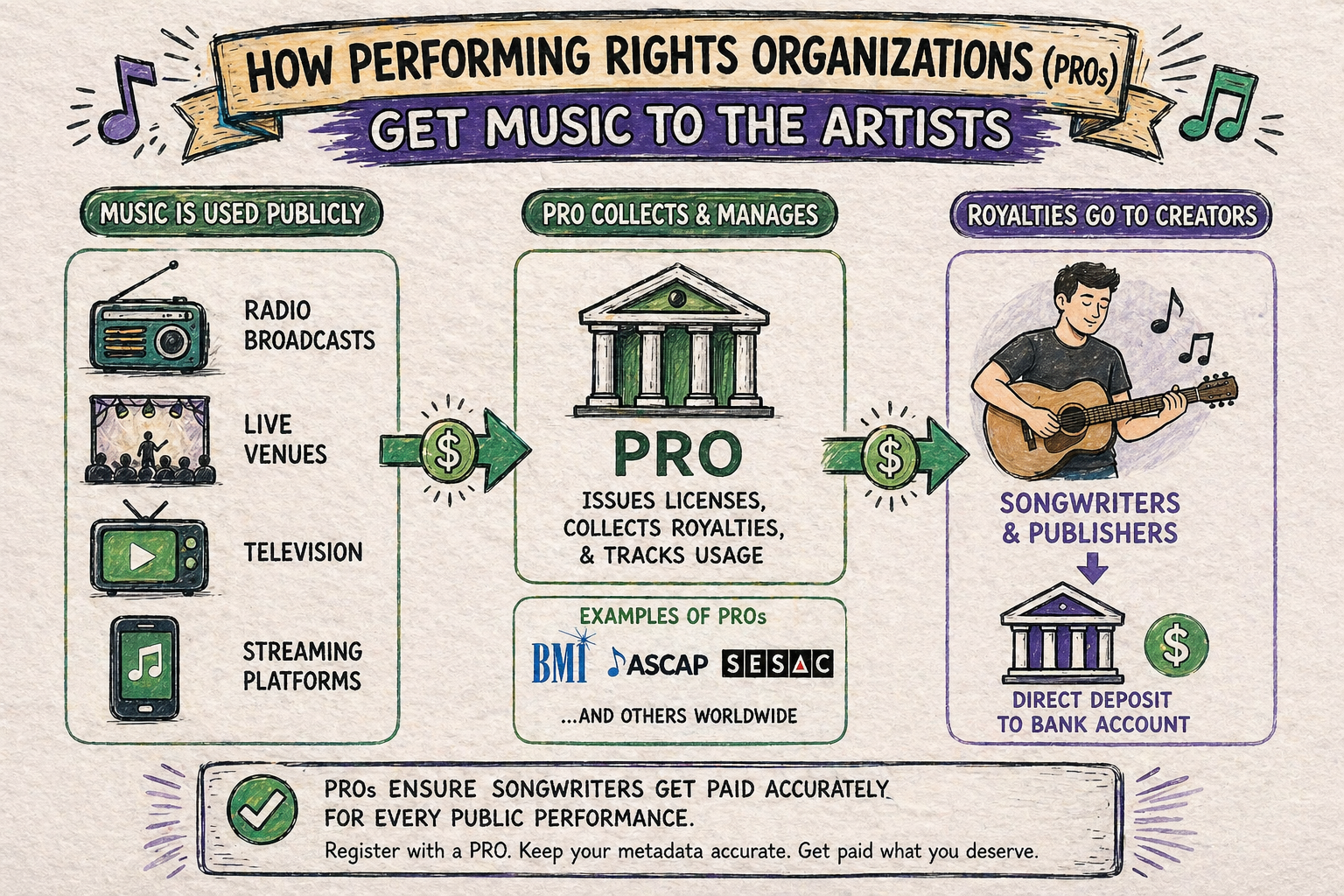
Performing Rights Organizations track and collect royalties when your music is played publicly. This includes radio broadcasts, live venues, television, and streaming platforms. They act as the bridge between music users and copyright owners, ensuring songwriters get paid accurately for all their public performances worldwide.
A PRO issues blanket licenses to businesses that use music. They then distribute those licensing fees to writers and publishers based on usage data. You cannot collect public performance royalties without joining one.
As a professional music distribution platform, we always ensure our artists’ metadata aligns perfectly with their chosen PRO. Seamless integration prevents missing funds.
ASCAP vs BMI vs PRS: Core Differences Explained
ASCAP and BMI are the dominant PROs in the United States, while PRS rules the United Kingdom. Their primary differences lie in registration costs, contract durations, and submission requirements. Selecting the right society depends heavily on your exact residency and your long-term release strategy.
Both ASCAP and BMI operate on a non-profit basis in the US. They track identical global performance sources. PRS operates under a similar model but focuses specifically on the UK and European collection networks.
Here is a direct comparison of the three organizations:
| Feature | ASCAP | BMI | PRS |
| Fees | $50 Writer / $50 Publisher | Free Writer / $150 Publisher | £30 Writer |
| Contract Length | 1 Year | 2 Years | 1 Year |
| Eligibility | US Citizens / Residents | Open Globally | UK / Global Creators |
Breaking Down the Big Two: ASCAP and BMI
American songwriters universally debate joining ASCAP or BMI. Both track domestic and international plays effectively, but they structure their payout schedules and joining fees differently. ASCAP charges an upfront fee, whereas BMI allows writers to register completely free while initially charging their publishing companies.
ASCAP is run exclusively by writers and publishers. BMI was founded by radio broadcasters. Despite these differing origins, both organizations collect from the exact same revenue pools.
We notice our artists perform equally well regarding payout amounts, regardless of which US PRO they choose. Your decision should rely on your budget for upfront fees and your preference for contract length.
When Should You Choose PRS?
PRS for Music is the standard choice for songwriters based in the UK. They offer direct access to the vast European royalty collection network. If your primary fanbase resides in Great Britain, registering directly with PRS speeds up your royalty collection timeline significantly and reliably.
PRS combines mechanical and performance tracking through their joint venture with MCPS. If you need a deeper understanding of how these specific rights differ, check out our guide on Mechanical vs Performance Royalties.
US writers can technically join PRS, but it rarely makes sense unless you plan to relocate. Cross-border collections take longer to process.
What About Indian Artists? (The Role of IPRS)
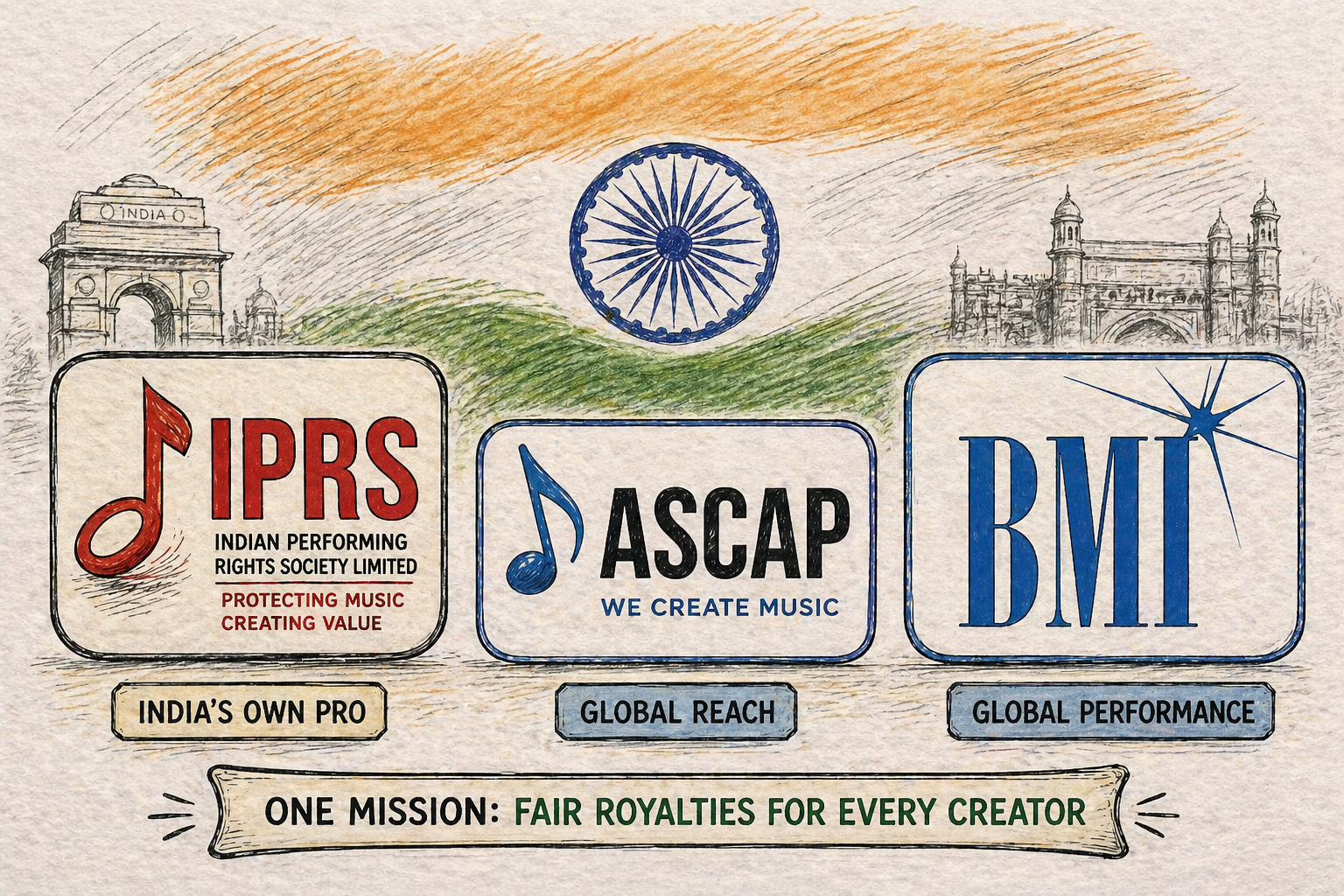
For independent creators based in India, joining IPRS (The Indian Performing Right Society) is a mandatory step. While ASCAP and BMI dominate the US market, IPRS is the official body collecting public performance royalties from television, radio, and live venues across India.
At Six Eyes Music, we often see Indian artists focus solely on global platforms while completely missing their local royalties. Our free distribution model, backed by a straightforward 20% revenue share, secures your global reach, but collecting your domestic publishing money requires an active IPRS membership.
Getting Your Metadata Right Before Registering
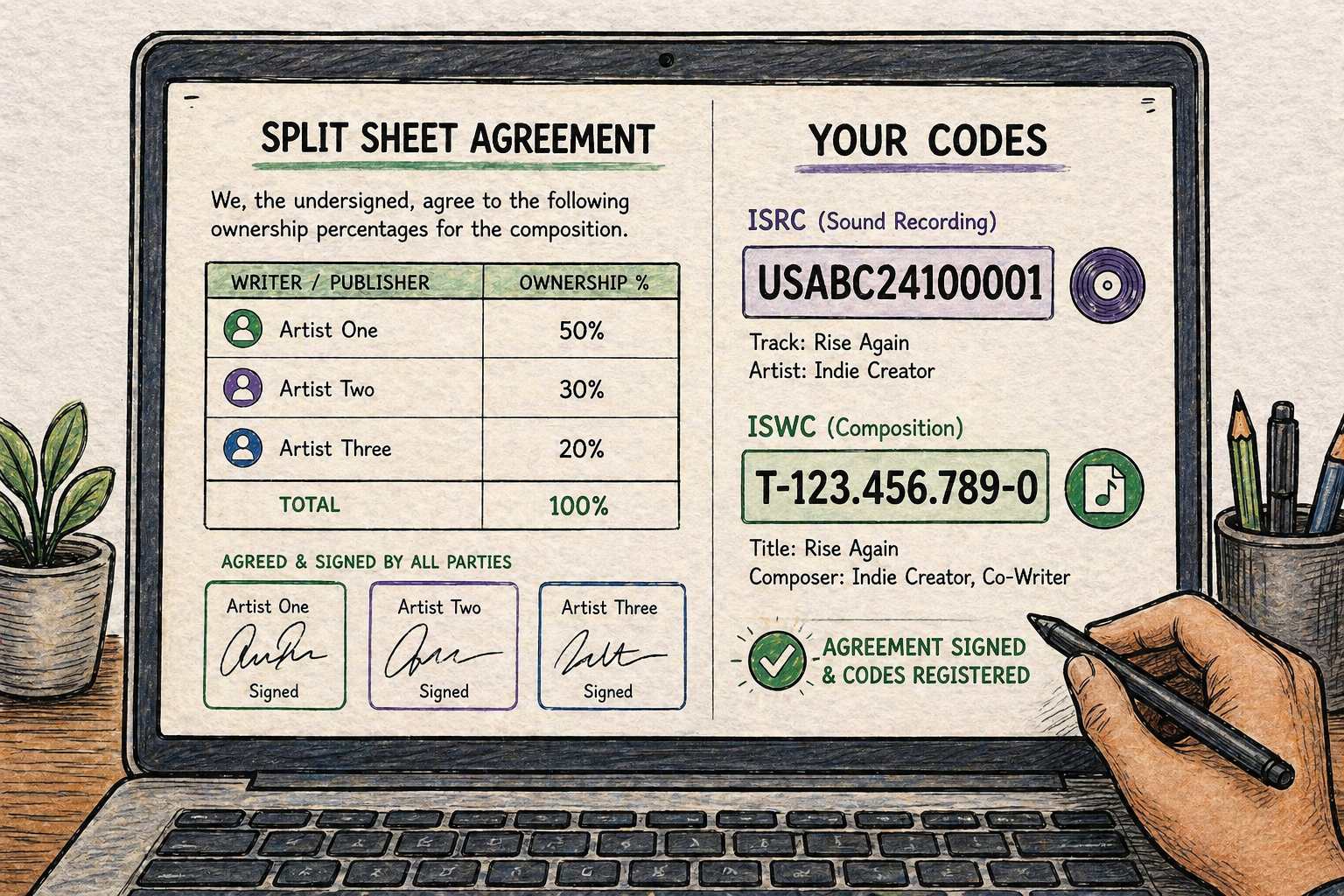
Clean metadata guarantees accurate royalty payouts from your PRO. Always register your songs with the correct identifier codes and accurate split sheets. Missing writer percentages or mismatched recording codes will constantly cause your royalties to sit in an industry black box indefinitely and permanently.
Every track requires proper identification before submission. You must learn the difference between ISRC vs ISWC to ensure your publishing matches your master recordings.
When signing a Songwriter Agreement with collaborators, lock in your exact percentage splits immediately. If you wait until the track blows up, disputes will freeze your money.
How Your PRO Works With Your Distributor
Your distributor handles the master recording, while your PRO handles the underlying composition. They collect entirely different pools of money daily. Using an integrated partner ensures you do not miss hidden digital revenues like streaming micro-syncs or obscure international performance and mechanical royalty collections.
We at Six Eyes Music deliver your tracks to DSPs like Spotify and Apple Music. We collect your master royalties for free, taking just a 20% revenue share.
We also help artists monetize platforms like YouTube. If you want to protect your visual assets on video platforms, review our YouTube Content ID guide.
Frequently Asked Questions (FAQs)
Independent artists frequently ask us the same core questions regarding PRO registration and royalty collection. We compiled the most common inquiries to clear up any lingering confusion. Review these specific fast facts thoroughly before finalizing your official membership with either ASCAP, BMI, or PRS.
Can I join both ASCAP and BMI?
No. Songwriters can only be affiliated with one PRO at a time for performance royalties. You can, however, switch when your contract expires.
Do PROs collect mechanical royalties?
Generally, no. US PROs only collect performance royalties. You need a publishing administrator or The Mechanical Licensing Collective (The MLC) for mechanicals.
How often do ASCAP and BMI pay out?
Both ASCAP and BMI distribute royalties quarterly. It usually takes six to nine months after a performance occurs for the money to reach your bank account.